

Immigration Announcement
Canada Introduces Temporary Border Measures in Response to Ebola Disease Outbreak

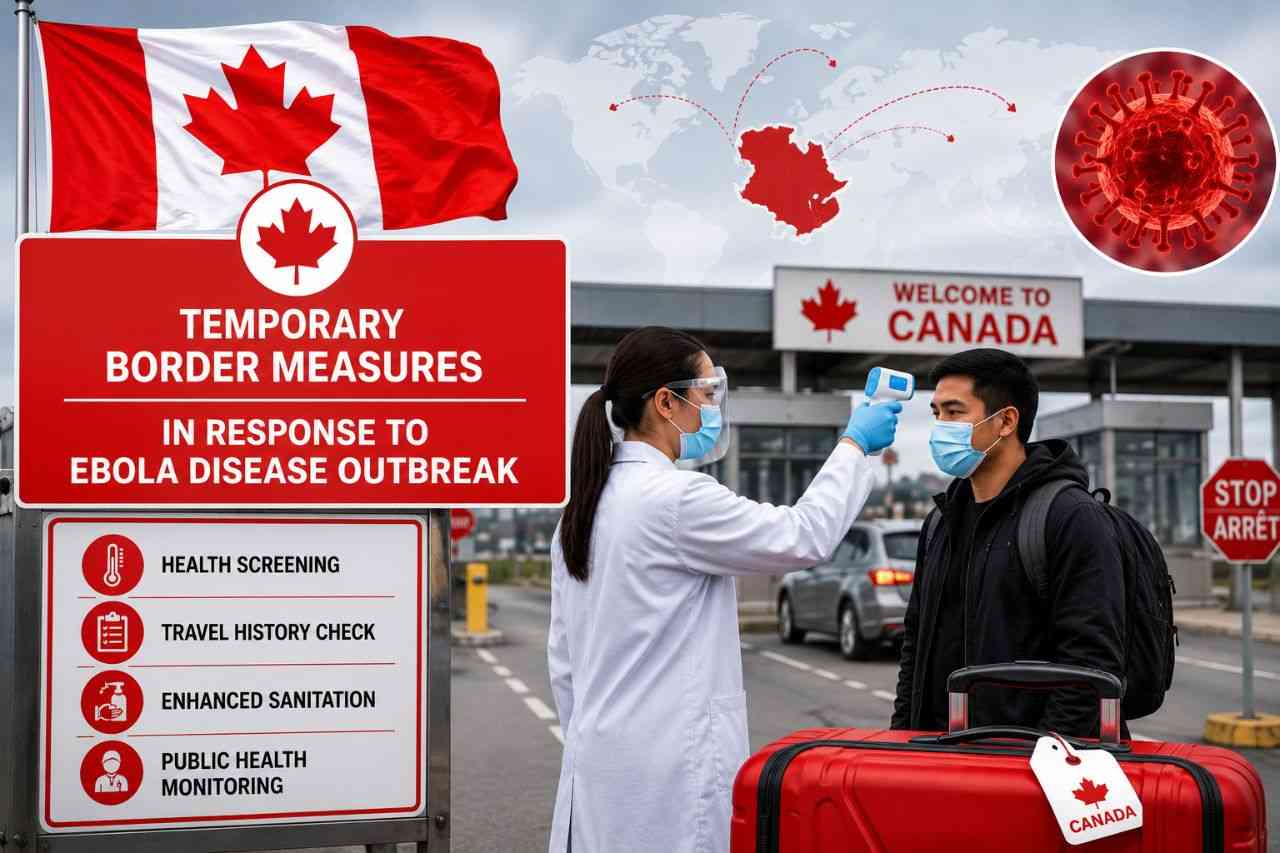

The Government of Canada has announced a set of temporary border measures in response to the ongoing Ebola disease outbreak in the Democratic Republic of the Congo and rising concerns in Uganda and South Sudan. These precautionary steps are designed to reduce the risk of Ebola entering Canada while the international situation continues to evolve. The measures came into effect starting May 27, 2026, and reflect Canada’s proactive and responsible approach to protecting public health at home and abroad.
Ebola Disease Outbreak Measures
Effective May 27, 2026, at 11:59 PM EDT, Canada has suspended immigration documents for residents of countries classified as having a high or very high risk of Ebola transmission. At this time, those countries are the Democratic Republic of the Congo, Uganda, and South Sudan. This suspension applies to previously approved temporary resident visas, electronic travel authorizations (eTAs), and permanent resident visas. Individuals holding these documents from affected countries will not be permitted to travel to Canada during the 90-day suspension period. Additionally, decisions on new applications for these documents from residents of affected countries have been temporarily paused.
A second measure takes effect May 30, 2026, at 11:59 PM EDT, under the authority of the Quarantine Act. This measure requires Canadian citizens, permanent residents, persons registered under the Indian Act, and foreign nationals who have been in any of the affected regions within the previous 21 days and are symptom-free to undergo a 21-day quarantine upon arriving in Canada. Those who do not have a safe location to quarantine will be provided with an appropriate facility. Travellers who display symptoms upon arrival will be isolated at a hospital for further medical assessment.
Who is Affected and Who is Not?
Individuals already in Canada from the affected countries are not impacted by these measures and may continue to stay in Canada for their authorized period. Standard border screening was already applied when they arrived.
Canadian citizens and permanent residents who have recently been in the affected regions can still return to Canada, but will be subject to health screening at ports of entry upon arrival.
Why Canada is Taking This Approach?
Ebola is a serious and potentially fatal disease. While the risk to people in Canada remains low and there are currently no reported Ebola cases anywhere in North America, the Government of Canada has chosen to take a precautionary approach given the severity of the disease and the evolving international public health situation.
One factor informing the timing of these measures is the FIFA World Cup 2026, which is bringing an unprecedented volume of international travel to North America. With large numbers of people moving across borders for the tournament, Canada has determined that additional safeguards are warranted to prevent any possible importation of the virus.
The World Health Organization has previously classified the Ebola outbreak in the Democratic Republic of the Congo as a public health emergency of international concern, underscoring the seriousness of the situation on the global stage.
What Travellers Should Know
If you have travel plans that involve any of the affected countries or regions, be aware that border measures can change with little notice. The Government of Canada has urged all travellers to check the latest information at travel.gc.ca before making any travel arrangements.
For immigration applicants from the Democratic Republic of the Congo, Uganda, or South Sudan, applications are temporarily on hold for certain document categories. These pauses are expected to remain in place for up to 90 days from May 27, 2026, unless conditions change sooner.
Canada’s Balanced Approach to Immigration and Public Health
Canada’s response to this situation demonstrates how the country balances its open and welcoming immigration system with its responsibility to protect public health. These measures are temporary and targeted, not permanent restrictions on immigration from any country. As the epidemiological situation changes, the Government of Canada has committed to reviewing and adjusting these measures accordingly.
At Canada Immigration News, we will continue to monitor this situation closely and provide timely updates as new information becomes available. If your immigration plans may be affected, please reach out for guidance.