


Work in Canada
Canada Added 88000 Jobs in May as Unemployment Falls to 6.6 Percent

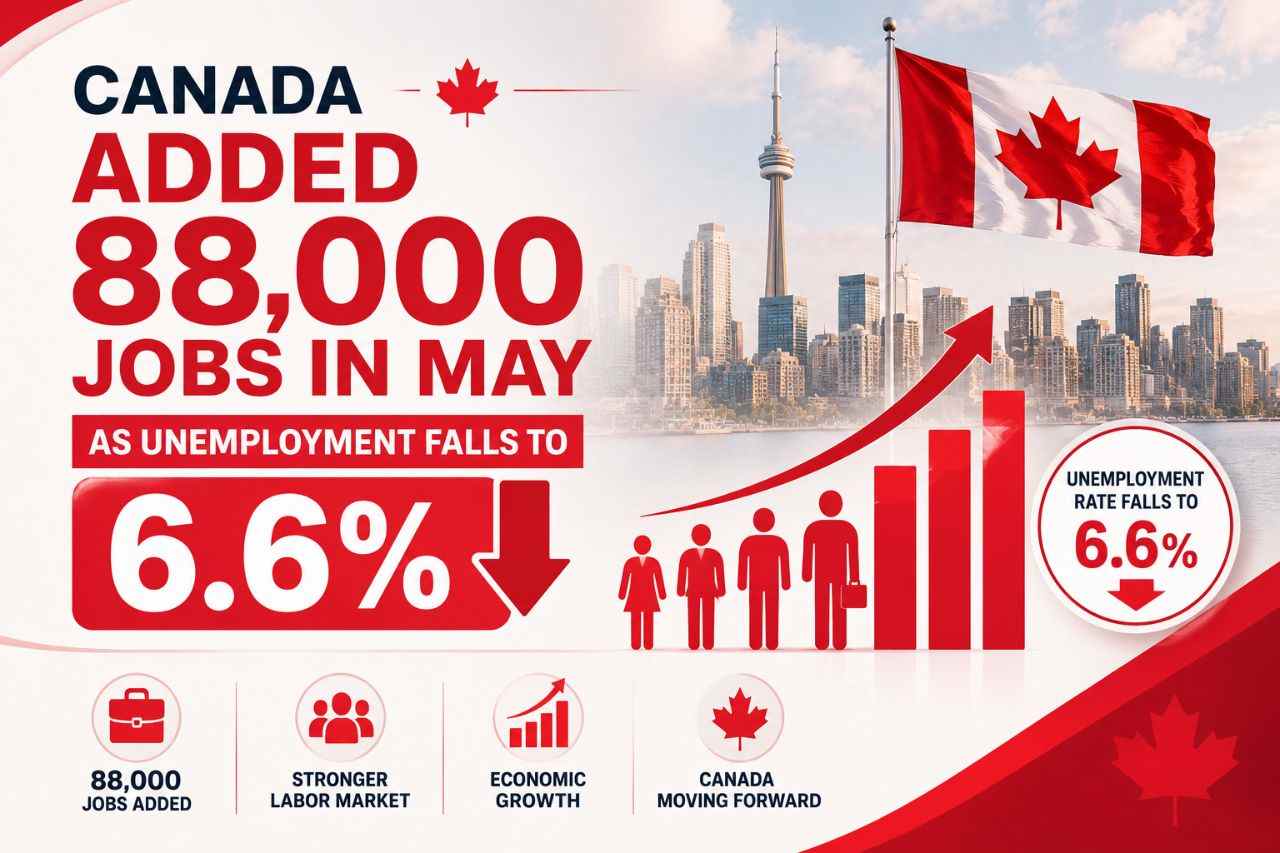

Canada’s employment growth in May 2026 delivered exactly the kind of news the country needed. After a tough start to the year, the Canadian economy added 88,000 jobs in a single month, dropping the national unemployment rate from 6.9 percent in April to 6.6 percent in May. That is a significant swing, and it has real meant for workers, newcomers, and anyone planning to build a career in Canada.
For those watching Canadian immigration, a stronger job market is always good news. It signals that Canada is ready to welcome skilled, motivated people, and that there are genuine opportunities waiting on the other side of the immigration journey.
The Job Statistics Tell a Confident Story
May marked the first meaningful employment gain Canada had seen since November 2025. The country had lost around 112,000 jobs in the first four months of the year, so a gain of 88,000 in a single month is not just recovery. It is momentum.
Full-time jobs led the charge, added 154,000 full-time positions in May, more than cancelling out the declines in part-time work in Canada. The employment rate, which measures the proportion of people aged 15 and older who are employed, rose 0.2 percentage points to 60.7 percent. That figure had not improved since November 2025, making May’s reading a genuine turning point.
Average hourly wages also moved in the right direction. Employees earned an average of 37.24 dollars per hour in May, representing a year-over-year increase of 3.0 percent. For workers at every level, rising wages alongside rising employment is a combination worth noting.
Who Benefited Most from the Job Gains?
The employment gains in May were not concentrated in one group. Core-aged workers between 25 and 54 years old saw strong increases. Employment among women in this age group rose by 31,000, almost entirely in full-time roles. Employment among core-aged men increased by 25,000. The unemployment rate for both groups fell by 0.4 percentage points, landing at 5.5 percent for women and 5.7 percent for men.
Young Canadians also saw improvement. Youth unemployment, which covers those aged 15 to 24, fell 0.9 percentage points to 13.4 percent. The number of young people working full-time jumped by 99,000 in May alone, reversing much of the decline recorded in the previous four months. For returning students entering the summer job market, the outlook improved meaningfully compared to the same period in 2025.
Industries That Led the Growth
Construction was the standout sector in May, adding 27,000 jobs and growing by 1.7 percent. Information, culture, and recreation added 19,000 positions. Transportation and warehousing also grew by 19,000, and accommodation and food services added 17,000 jobs in Canada.
These are industries where newcomers to Canada have historically found strong entry points. Construction, in particular, remains one of the most in-demand sectors as Canada continues to build new housing and infrastructure. The growth in transportation and accommodation also points to a broadening economic recovery.
The one sector that moved in the opposite direction was wholesale and retail trade, which shed 35,000 jobs in May 2026. Employment in this sector has been trending downward since late 2025 and continues to face pressure.
Regional Highlights Across Canada
- Ontario led provincial employment gains with 42,000 new jobs, bringing two consecutive months of growth to a combined 84,000. The unemployment rate in Ontario fell to 7.0 percent, the lowest it had been since September 2024.
- British Columbia added 25,000 jobs, partially recovering from earlier losses. Alberta grew by 14,000 and was the strongest performer on a year-over-year basis, with employment up by 104,000 compared to May 2025.
- In Quebec, employment edged up by 13,000 after months of decline. The province’s unemployment rate dropped to 5.6 percent. Prince Edward Island also saw notable growth, with employment rising 1.3 percent and a year-over-year gain of 5.1 percent.
- In the country’s major cities, the trend was also positive. Toronto’s unemployment rate fell sharply to 6.8 percent, its lowest since late 2023. Montreal dropped to 6.5 percent and Vancouver reached 6.4 percent.
What This Means for People Planning to Come to Canada?
Strong Canada employment growth figures like May’s are a meaningful signal for anyone considering immigration. A healthy labour market means more job offers, more employer-sponsored opportunities, and more pathways to permanent residence through programs that reward employment.
Canada continues to look for skilled workers to fill roles that its domestic workforce cannot cover on its own. A job market that is growing, with rising wages and broad-based sector gains, is the kind of environment where a newcomer can genuinely build something lasting.
Canada’s employment growth in May 2026 is a sign that the economy is regaining its footing. With 88,000 new jobs, a falling unemployment rate, rising wages, and gains across multiple provinces and sectors, Canada is showing the kind of strength that makes it one of the world’s most attractive destinations for skilled immigrants.
Canada Immigration News will continue to track every major development in the Canadian labour market and its connection to immigration. Stay with us for analysis, updates, that keeps you informed and ready.
Frequently Asked Questions
Q: How many jobs did Canada add in May 2026?
A: Canada added 88,000 jobs in May 2026, the first significant monthly employment gain since November 2025.
Q: What is Canada’s unemployment rate after May 2026?
A: The national unemployment rate fell to 6.6 percent in May 2026, down from 6.9 percent in April.
Q: Which Canadian province saw the most job growth in May 2026?
A: Ontario led with 42,000 new jobs in May. Alberta recorded the highest year-over-year gain, with employment up by 104,000 compared to May 2025.
Q: Does a stronger job market help immigration to Canada?
A: Yes. A growing job market increases the availability of job offers, employer-sponsored immigration pathways, and opportunities for skilled newcomers to qualify for permanent residence.
Q: Which sectors grew the most in Canada in May 2026?
A: Construction, information and culture, transportation and warehousing, and accommodation and food services all saw strong gains in May 2026.