

Immigration Announcement
Canada Ebola Travel Restrictions Extended Until September 28, 2026: What Immigration Applicants Need to Know

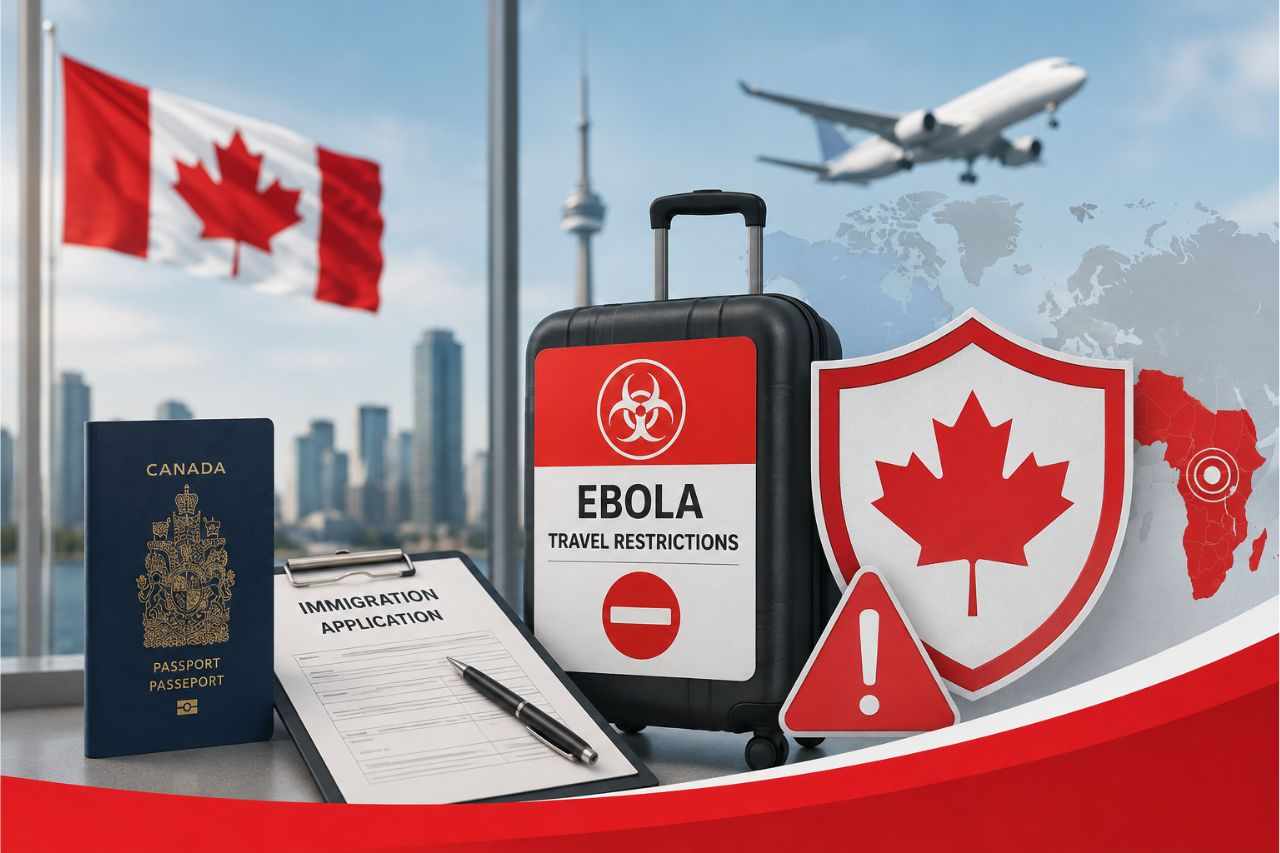

Canada Ebola travel restrictions have been extended for another thirty days. The measures now remain in place until September 28, 2026, as Canada continues its precautionary response to the Ebola outbreak affecting the Democratic Republic of the Congo, Uganda and South Sudan.
For travellers, the extension is more than a health-related update. It can also affect travel plans, immigration document validity, application finalization and the ability of certain foreign nationals to board flights to Canada.
Canada Ebola Travel Restrictions Now Continue Through September 28
The Government of Canada has extended its temporary Ebola border measures until 11:59 p.m. EDT on September 28, 2026. Canada says the health risk to people in the country remains low, but the measures are being maintained because of the seriousness of Ebola disease and the evolving international situation.
The current measures affect people who live in or have recently travelled through:
- Democratic Republic of the Congo
- Uganda
- South Sudan
A key point is that the rules are not based only on citizenship. For immigration document suspensions, Canada looks at the last country of residence listed in the immigration application.
How Canada Ebola Travel Restrictions Affect Immigration Applications
One of the most important consequences involves immigration documents.
Foreign nationals who listed one of the affected countries as their last country of residence may have their immigration documents temporarily suspended. This can prevent them from travelling to Canada even if they already hold an approved:
- Temporary resident visa
- Permanent resident visa
- Electronic travel authorization
- Other relevant immigration document
IRCC continues to process new and existing applications affected by the measures. However, applications will not be finalized while the temporary measures remain in place.
This distinction matters for people planning their Canada immigration journey. Processing an application and finalizing it are not necessarily the same thing under these temporary measures.
Canada Ebola Travel Restrictions and Recent Travel History
Travel history is another major consideration.
As of July 20, 2026, foreign nationals who have been in the Democratic Republic of the Congo within the previous 21 days cannot travel to Canada. This restriction also affects boarding a flight to Canada.
Travellers who have recently been in Uganda or South Sudan may be permitted to travel, depending on their status and documents, but they can face additional public health requirements on arrival.
Canadian citizens and permanent residents are treated differently. They can return to Canada after travelling to affected areas, but they must follow applicable health screening and quarantine requirements.
A 21-Day Ebola Quarantine May Still Apply
For eligible travellers who have been in the Democratic Republic of the Congo, Uganda or South Sudan during the previous 21 days, Canada may require a 21-day quarantine.
Travellers must have a suitable quarantine plan before arriving. This means having a place where they can remain for the full quarantine period, avoid direct contact with other people and access necessities such as food, water, medication and local health services.
Travellers who develop symptoms may be isolated and transported to a medical facility for assessment and treatment.
The rules therefore have practical consequences beyond simply whether someone can board a plane.
What Happens If You Already Have an Approved Canadian Visa?
Having an approved immigration document does not automatically override the Canada Ebola travel restrictions.
According to IRCC, affected foreign nationals may be unable to travel even when they already hold an approved visa, permit or eTA.
Applicants who receive a passport request while affected should also be careful. IRCC advises affected applicants not to send their passports to a visa application centre for finalization until the measures have ended, unless they have appropriate instructions or an exemption.
This makes it especially important for applicants to check their individual circumstances rather than assuming that an approved document guarantees immediate travel.
Are There Exemptions From Canada Ebola Travel Restrictions?
Yes. Some exemptions exist.
Certain diplomatic personnel, crew members, visiting forces and individuals travelling for specific medical or national-interest reasons may qualify. Other foreign nationals may need an exemption letter before departure.
Canada says exemption requests can be considered case by case. Applicants may need to provide evidence explaining why an exemption should apply and what measures they have taken to reduce public health risks.
For people with urgent immigration or humanitarian circumstances, understanding whether an exemption may apply could be important.
What should travellers do before making Canada travel plans?
Anyone affected by the Canada Ebola travel restrictions should verify the latest rules immediately before travelling because temporary border measures can change.
Travellers should:
- Check their last country of residence and recent travel history.
- Confirm whether their immigration document is affected.
- Review whether they need an exemption.
- Prepare a quarantine plan if required.
- Avoid sending a passport for finalization if IRCC advises against it.
- Check the latest Government of Canada travel information before departure.
This is particularly important for international students, temporary workers, visitors and permanent residence applicants whose travel plans are connected to their immigration status.
What This Means for Canada Immigration Applicants
The extension does not mean that all immigration applications from the affected countries are cancelled or refused.
Instead, the current approach separates application processing from finalization and travel. IRCC can continue working on applications, while affected individuals may remain unable to travel or receive final decisions until the temporary measures end.
For applicants planning to Visit Canada, study in Canada or pursue other immigration pathways, this distinction can help prevent unnecessary confusion about application status and travel eligibility.
The Canada Ebola travel restrictions are currently scheduled to remain in place until September 28, 2026. For affected travellers, the most important issue is not simply whether they hold a valid immigration document, but whether their residence, recent travel history and personal circumstances place them under the temporary measures.
Because these rules can change with limited notice, applicants should check the latest official information before making travel arrangements.
For more Canada immigration updates, visit Canada Immigration News.
Frequently Asked Questions
1. How long will Canada Ebola travel restrictions remain in place?
The current temporary measures are scheduled to remain in effect until September 28, 2026, at 11:59 p.m. EDT.
2. Can I travel to Canada if I already have an approved visa?
Not necessarily. If you are covered by the temporary measures, your immigration document may be suspended and you may be unable to travel even with an approved visa.
3. Does citizenship determine whether the Ebola measures apply?
Not in every situation. For immigration document suspensions, Canada considers the last country of residence listed in the immigration application.
4. Who may need to complete a 21-day quarantine?
Eligible travellers who have recently been in the affected countries may be required to quarantine for 21 days, subject to applicable exemptions.
5. Can affected immigration applications still be processed?
Yes. IRCC says it will continue processing applications, although affected applications will not be finalized while the temporary measures remain in effect.