

Immigration Announcement
Canada to Host 2028 Francophonie Summit as It Expands Global French-Language Partnerships

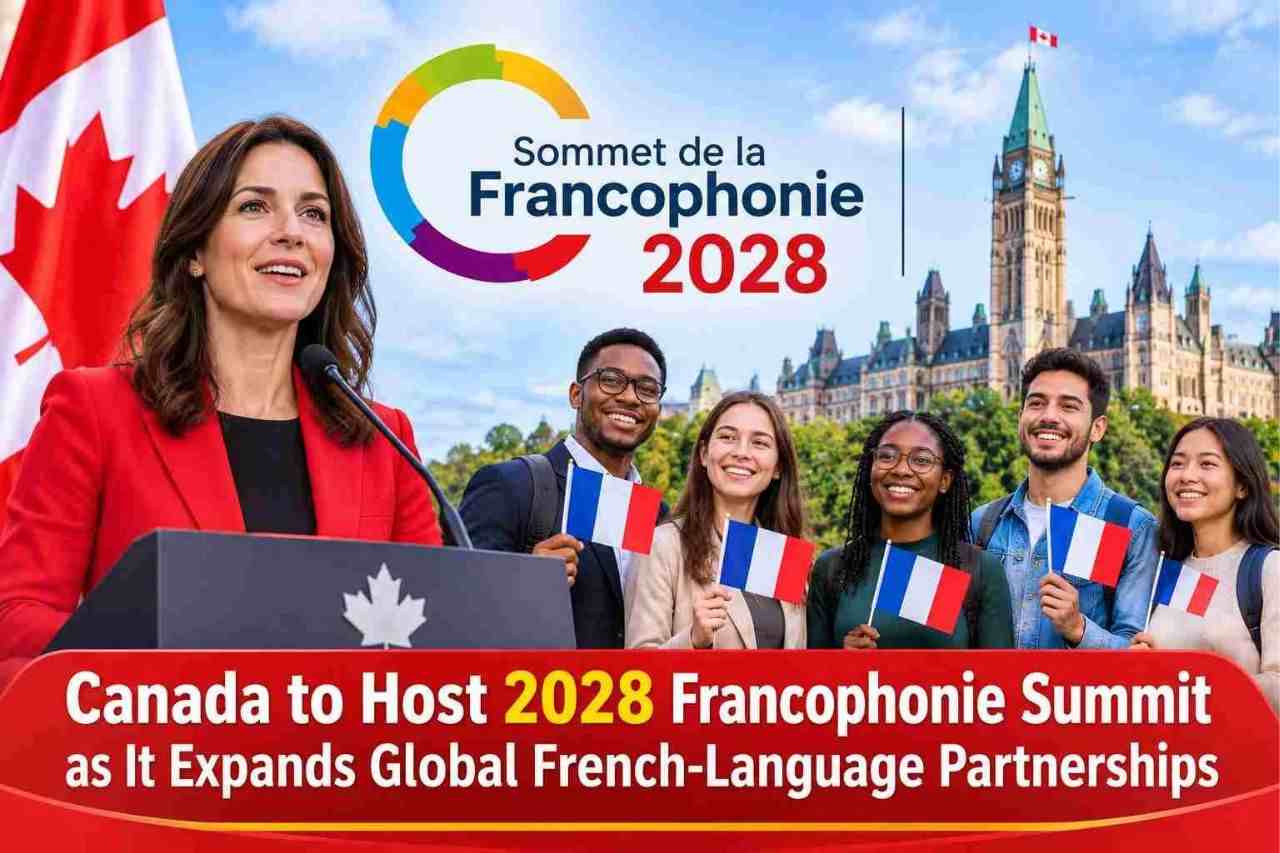

Canada has been officially designated as the host country for the 2028 Sommet de la Francophonie, bringing renewed attention to the country’s efforts to strengthen French-language communities, international academic partnerships and Francophone immigration.
Prime Minister Mark Carney confirmed the announcement on November 16, 2026, during the 20th Sommet de la Francophonie in Phnom Penh, Cambodia. The National Capital Region will welcome representatives from more than 90 member states and governments, while Canada prepares a broader series of educational, cultural and youth-focused initiatives.
The announcement also includes more than $23 million in institutional support over four years for the Organisation internationale de la Francophonie (OIF) and the Agence universitaire de la Francophonie (AUF).
Canada Selected to Host the 2028 Francophonie Summit
The 2028 summit will bring together leaders and representatives from the Francophonie’s member states and governments to discuss shared priorities and strengthen international cooperation.
The National Capital Region will host the event, marking Canada’s return as summit host for the first time in two decades. The previous Canadian edition took place in Québec City in 2008.
The Francophonie brings together countries and governments connected through the French language and cooperation in areas such as education, culture, diplomacy and economic development.
For Canada, hosting the 2028 summit provides an opportunity to strengthen relationships with French-speaking countries and promote the role of French in international cooperation, trade, research and digital communication.
More Than $23 Million for Francophone and Academic Cooperation
Alongside the summit announcement, the federal government reaffirmed more than $23 million in investments over four years to support the OIF and AUF.
The funding is intended to promote the French language, support cultural and linguistic diversity, and strengthen scientific and educational cooperation.
The two organizations have different but complementary roles:
- Organisation internationale de la Francophonie: Supports cooperation among French-speaking countries and governments in areas including language, culture, diplomacy and development.
- Agence universitaire de la Francophonie: Promotes international academic cooperation, research, university partnerships and educational exchange across Francophone networks.
These investments form part of Canada’s wider efforts to strengthen connections with French-speaking communities and institutions internationally.
The Prime Minister also announced a separate $24 million package for projects involving community resilience, public health, sustainable transportation and the rights and economic empowerment of women and girls in Francophone African countries. This funding is distinct from the more than $23 million in institutional support for the OIF and AUF.
Manitoba Joins the Francophonie as an Observer Government
Another development announced during the summit was Manitoba’s admission as an observer government of the Organisation internationale de la Francophonie.
Manitoba joins other Canadian provinces with formal roles in the organization. Québec and New Brunswick are full members, while Ontario and Nova Scotia are observers.
This development recognizes the importance of French-language communities beyond Quebec and provides another platform for Manitoba to participate in international Francophone cooperation.
For provinces with established French-speaking communities, international partnerships can support cultural exchange, educational collaboration and connections with French-speaking markets.
Moncton to Host the 2028 Francophonie Youth Pre-Summit
The federal announcement also confirmed that Moncton, New Brunswick, will host a Francophonie youth pre-summit in August 2028.
The event will bring together young people from Canadian provinces and Francophonie member countries. Participants will have an opportunity to connect, discuss issues relevant to the summit and present their perspectives to heads of state and government.
The youth pre-summit is intended to give younger generations a more visible role in international discussions about the French language, culture and cooperation.
This initiative also highlights the importance of New Brunswick’s Francophone communities in Canada’s wider international engagement.
How the Summit Connects With Canada’s Francophone Immigration Targets
The announcement is also relevant to Canada’s immigration strategy, particularly its efforts to increase the number of French-speaking permanent residents settling outside Quebec.
Under the 2027–2029 Immigration Levels Plan, Canada has set the following targets for French-speaking permanent resident admissions outside Quebec:
| Year | Target |
| 2027 | 9.5% |
| 2028 | 10.5% |
| 2029 | 12% |
The 2028 target of 10.5% represents a planned increase from 9.5% in 2027. The broader objective is to strengthen Francophone minority communities across Canada and support their demographic and economic development.
These targets are part of the federal immigration levels framework. They are not a separate immigration program or a guarantee that an individual French-speaking applicant will receive permanent residence.
Canada already offers several immigration pathways through which French-speaking candidates may qualify.
For example, French-language proficiency is a category under the Express Entry system. Eligible candidates may also explore provincial nominee programs and Francophone-focused community immigration initiatives, depending on their qualifications and the available program requirements.
Candidates interested in these opportunities should review the official IRCC information on Francophone immigration and current program eligibility rules.
What the 2028 Summit Means for French-Speaking Communities
Canada’s selection as the 2028 summit host, combined with new academic and cultural initiatives, signals continued federal interest in strengthening international Francophone relationships.
The initiatives extend beyond hosting an international event. They include institutional funding, academic cooperation, youth participation and stronger provincial representation within the Francophonie.
For French-speaking newcomers, these developments provide broader context for Canada’s efforts to strengthen Francophone communities outside Quebec. However, the summit and related investments do not independently change immigration eligibility or create new permanent residence pathways.
Applicants considering Canada should continue to assess their language qualifications, education, work experience and eligibility under existing immigration programs.