

Immigration Announcement
Ontario Expands OINP Eligibility for Self-Employed Internationally Educated Physicians in 2026

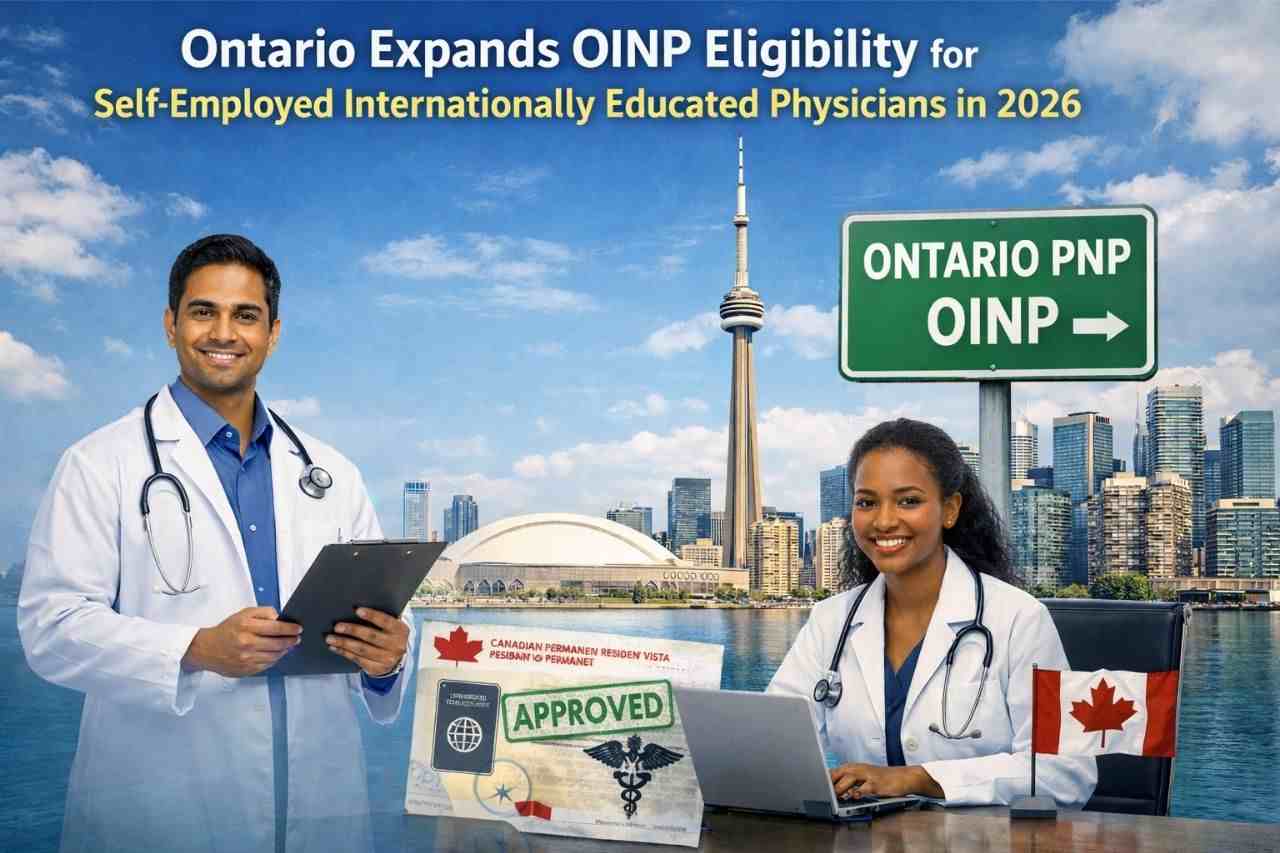

Ontario has taken a significant step to widen permanent residence pathways for foreign-trained doctors. Effective January 1, 2026, the Ontario Immigrant Nominee Program has updated eligibility rules under the Employer Job Offer: Foreign Worker stream, making it easier for certain self-employed internationally educated physicians to qualify for provincial nomination.
The update aligns Ontario’s immigration framework with recent regulatory changes to the Medicine Act, 1991, reflecting the province’s ongoing effort to address physician shortages while maintaining regulatory standards.
What Changed Under the OINP Rules
Under the revised criteria, internationally educated physicians who hold a provisional certificate of registration with the College of Physicians and Surgeons of Ontario are now eligible to apply to the OINP as self-employed individuals. To qualify, applicants must also possess a valid Ontario Health Insurance Plan billing number, confirming their ability to independently bill for insured medical services.
Previously, eligibility for self-employed physicians was narrower, limiting access for many qualified doctors who were already practising in Ontario under provisional arrangements. The update expands eligibility across physicians working under National Occupational Classification codes 31100, 31101, and 31102, provided they are members in good standing with the CPSO.
Why OHIP Billing Matters
The requirement for an OHIP billing number is central to the policy change. Billing privileges demonstrate that a physician is authorized to practise medicine independently in Ontario’s publicly funded health system. From an immigration perspective, this confirms economic integration and reduces risk related to labour market attachment.
Physicians who cannot obtain billing numbers are considered unable to operate independently, which directly affects eligibility under self-employed pathways.
Who is No Longer Eligible as Self-Employed
The amendments also remove postgraduate education licence holders from eligibility under the self-employed category. These licence holders, typically medical residents, do not qualify for OHIP billing numbers and therefore cannot meet the revised requirements.
However, postgraduate licence holders are not excluded from the OINP entirely. They may still apply through the Employer Job Offer: Foreign Worker stream if they have a qualifying job offer from an Ontario employer. This distinction preserves pathways for early-career physicians while reinforcing program integrity.
Why Ontario Made This Change
Ontario continues to face persistent physician shortages, particularly in primary care and rural communities. By broadening access for internationally educated doctors who are already contributing to the health system, the province aims to improve retention while supporting long-term workforce stability.
The changes also reflect closer alignment between immigration policy and professional regulation, reducing inconsistencies that previously prevented qualified physicians from transitioning to permanent residence.
What Internationally Educated Physicians Should Do Next
Physicians considering this pathway should confirm:
- Their CPSO registration status
- Eligibility for OHIP billing
- Compliance with OINP program requirements
Given the technical nature of the criteria, careful documentation remains essential. Overall, the 2026 update represents a meaningful expansion of opportunities for internationally trained doctors seeking permanent residence in Ontario while reinforcing standards tied to professional practice.