

Work in Canada
Manitoba Recruits 13 U.S. Trained Physicians to Expand Access to Health Care

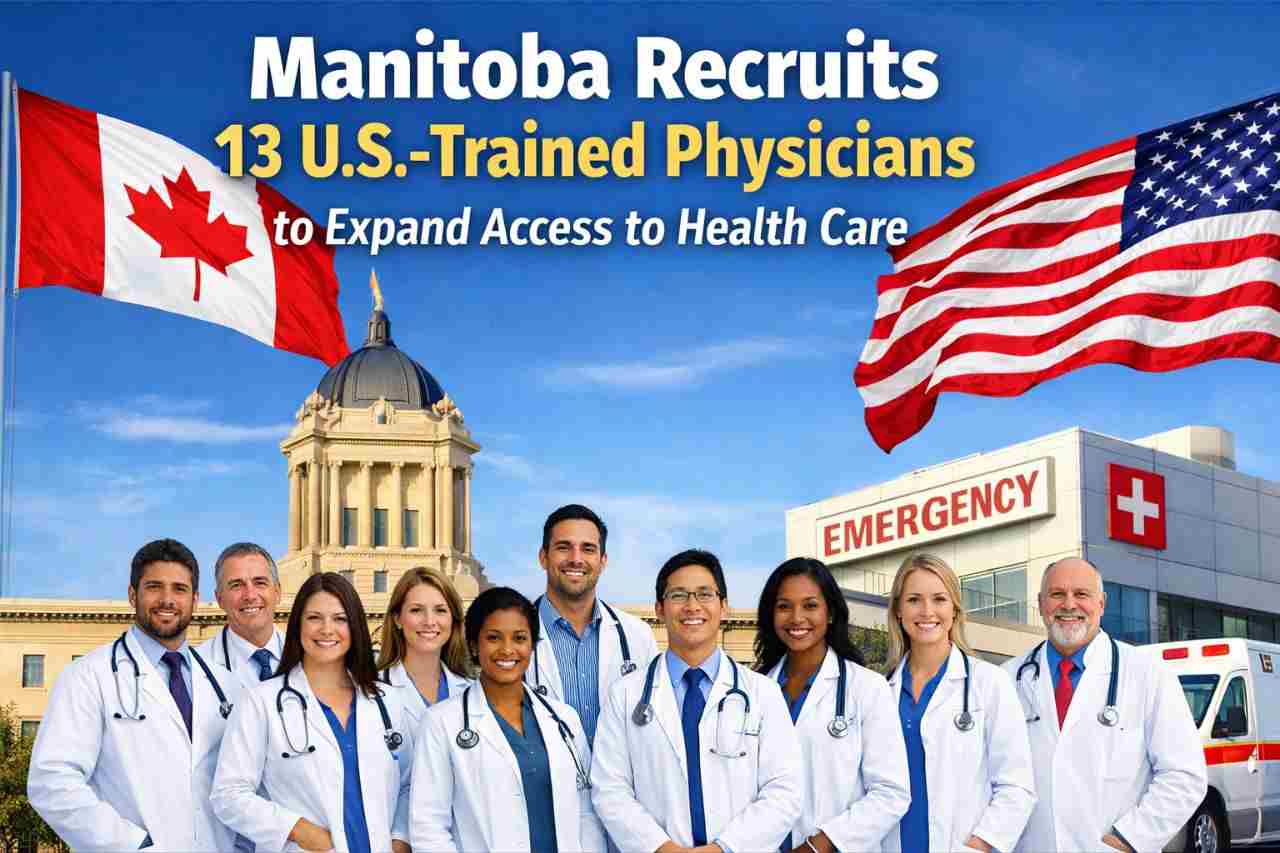
Manitoba is taking decisive steps to strengthen its health care system as the province recruits 13 U.S.-trained physicians to improve access to care in communities across Manitoba. This latest recruitment drive builds on the addition of 285 doctors in 2025 and reflects Manitoba’s focused approach to expanding medical capacity.
With rising population needs and increasing demand for timely care, Manitoba physician recruitment has become a key part of the province’s broader health strategy. These new physicians are expected to support family medicine, speciality care, and community-based services, helping more residents connect with doctors faster.
For newcomers, health professionals, and immigration candidates, this announcement also highlights how Canada’s provinces are actively using international talent to strengthen essential services.
How New Physicians Are Improving Access to Care
The recruitment of 13 U.S.-trained physicians is already having a measurable impact. Alongside new doctors, Manitoba has introduced a new online booking system, medinav.ca, designed to connect patients with family doctors and clinics more quickly.
In 2025 alone, this system helped facilitate nearly 50,000 visits across the province. According to national data, Manitoba now leads Canada in same-day or next-day access to a health care provider. This combination of Manitoba physician recruitment and digital access tools is reducing wait times and helping families receive care when they need it most.
Why U.S. Trained Doctors are Choosing Manitoba
Physicians from the United States are increasingly choosing Manitoba for professional and personal reasons. Canada’s publicly funded health care system allows doctors to focus on patient care without the administrative burden often seen in private insurance-based systems.
Doctors have cited greater professional autonomy, strong community support, and improved work-life balance as key reasons for relocating. Manitoba also offers diverse practice environments, from urban centers like Winnipeg to smaller rural and regional communities.
These factors are making Manitoba physician recruitment more attractive to internationally trained medical professionals looking for stability and long-term career growth.
Role of International Recruitment in Manitoba’s Health Strategy
International recruitment is a central part of Manitoba’s broader health workforce strategy. The province’s Health Care Retention and Recruitment Office continues to support doctors through licensing, immigration processes, and community placement. Through these efforts, 58 physicians have been hired and placed across Manitoba, including internationally trained doctors from multiple countries. These placements help address shortages in both primary and specialty care.
Manitoba physician recruitment is also aligned with federal immigration pathways that support skilled professionals, including provincial nominee programs and work permit options for health care workers.
Impact on Communities Across Manitoba
For many communities, especially outside major urban areas, the arrival of new physicians means improved access to reliable care. Families benefit from shorter wait times, better continuity of care, and stronger local health teams. Specialty services also see gains, reducing the need for patients to travel long distances for treatment. This strengthens community health outcomes and improves overall quality of life. As Manitoba continues to grow, physician recruitment remains a key factor in supporting both residents and newcomers settling in the province.
What This Means for Health Care Professionals and Immigrants
For internationally trained doctors, Manitoba’s approach highlights real opportunities to practise medicine in Canada. With structured support for licensing and immigration, the province offers a clear pathway for qualified professionals to build careers in Canada. For immigration applicants, this trend shows how provinces actively use targeted recruitment to meet labour needs. Health care professionals may benefit from provincial nominations, employer-supported pathways, and priority processing in certain cases. Manitoba physician recruitment also reflects Canada’s broader focus on using skilled immigration to strengthen public services.
Manitoba’s recruitment of 13 U.S.-trained physicians marks another important step in strengthening health care access across the province. By combining international recruitment with digital tools and community placement, Manitoba is improving how quickly residents can see a doctor. This strategy supports families, strengthens rural and urban care, and positions Manitoba as a leading province for health care access in Canada. As demand for medical professionals continues to rise, Manitoba physician recruitment will remain a critical part of the province’s long-term health and population growth strategy.