


Work in Canada
Canada Trucking Sector Linked to Temporary Foreign Worker Program Faces Labour Crises

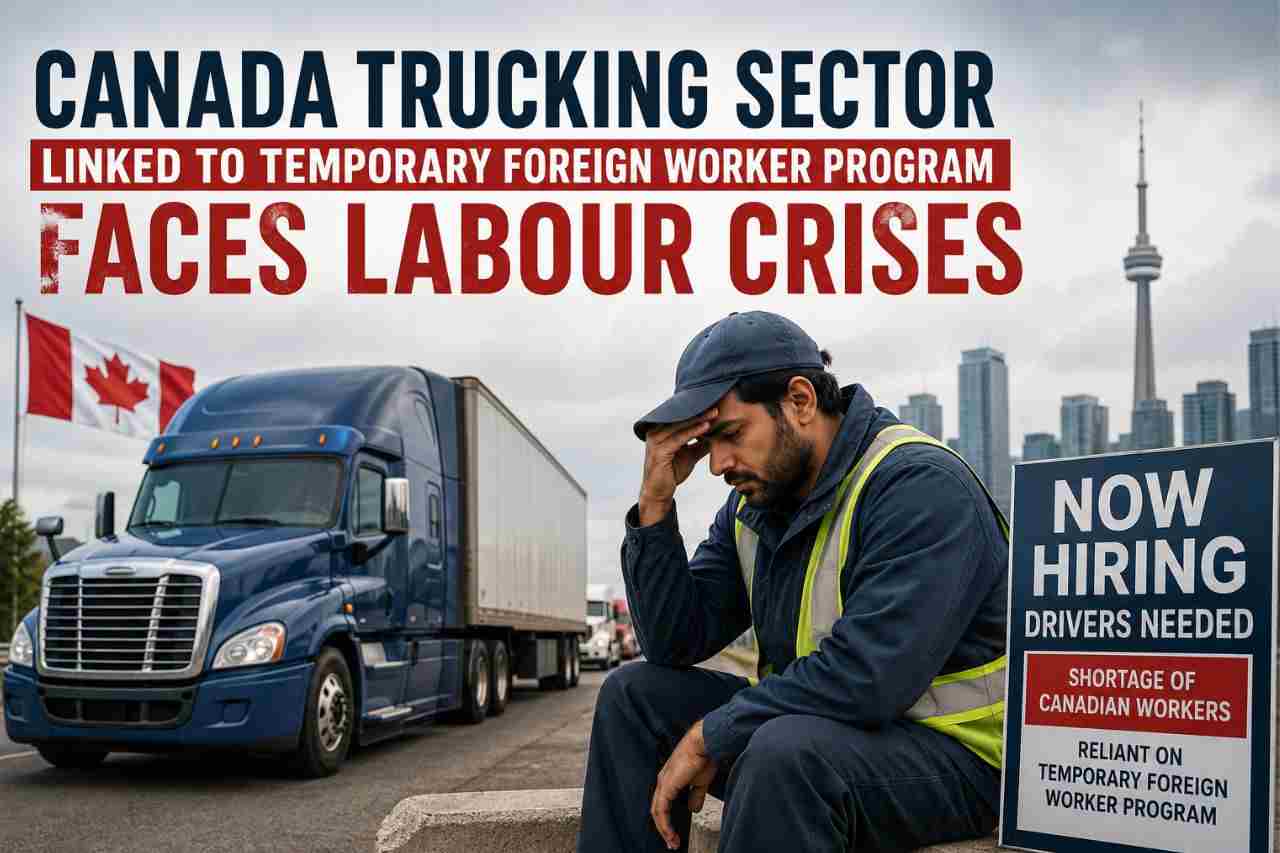
Canada’s trucking industry is facing growing scrutiny as a new report raises serious concerns about how the Temporary Foreign Worker program is reshaping one of the country’s most important sectors. The latest discussion surrounding Canada trucking labour shortage is no longer focused only on driver shortages. It is now raising broader questions about wages, worker protections, immigration policy, and labour standards.
According to a recent report by Teamsters Canada, the number of Temporary Foreign Worker permits approved for truck drivers has reportedly increased more than fourfold since 2010. The findings suggest that what was once presented as a temporary solution may now be evolving into a long-term workforce strategy built around lower labour costs and vulnerable workers.
Canada Trucking Labour Shortage Debate Intensifies
For years, the trucking industry has argued that a major Canadian trucking labour shortage was threatening supply chains and economic stability. The solution promoted by many employers was increased access to temporary foreign workers. However, the latest report challenges this narrative directly. Researchers argue that the issue may not be a shortage of workers at all. Instead, they suggest the sector is facing a shortage of attractive jobs with fair wages and stable working conditions.
According to the findings, trucking companies have increasingly relied on migrant labour while wages and conditions across the industry have continued to weaken. This has sparked major concerns among labour groups and policymakers.
How the Temporary Foreign Worker Program Changed Trucking Jobs?
One of the strongest findings connected to the Canada trucking labour shortage debate is the dramatic rise in temporary foreign worker approvals. The report states that trucking-related TFW permits increased more than four times between 2010 and 2024. The number of approvals in the most recent year was reportedly among the highest ever recorded. Critics argue that if the labour shortage were truly temporary, the industry would not continue depending on migrant labour year after year. Instead, they believe the sector has shifted toward a business model increasingly dependent on workers with fewer protections and less bargaining power.
How are Working Conditions Affecting Drivers?
The latest concerns around labour shortage are closely connected to working conditions within the industry. Labour groups argue that stagnant wages, long hours, and deteriorating conditions are pushing Canadian workers away from trucking jobs. Rather than improving compensation or benefits, some employers are relying more heavily on temporary labour programs to fill vacancies.
This has created what many critics describe as a “race to the bottom” where lower standards gradually spread across the sector. The report argues that improving wages and work-life balance could help attract more domestic workers back into the industry.
The Driver Inc Controversy
Another major issue connected to the trucking sector labour shortage debate is the widespread use of the “Driver Inc” model. Under this structure, drivers are often classified as independent contractors instead of employees.
Critics argue that many drivers effectively work as employees but without access to overtime pay, pension contributions, Employment Insurance, or workplace protections. The federal government has already acknowledged concerns surrounding worker misclassification.
Authorities previously announced inspection initiatives and additional funding aimed at addressing labour violations within the trucking sector. Labour organizations argue that these practices have weakened conditions for both migrant and Canadian-born drivers.
Why Migrant Workers Remain Vulnerable
The structure of Canada’s Temporary Foreign Worker Program is also central to the Canada trucking labour shortage debate. Many temporary work permits are tied to a single employer. This means workers may risk losing their legal status if they leave their job or report workplace abuses. Labour advocates argue this creates vulnerability to exploitation, wage theft, and unsafe working conditions. Critics also warn that workers under closed permits may feel less able to report labour violations or participate in union activity. This has increased calls for reforms that would allow greater labour mobility and stronger protections for temporary workers.
Labour Shortages Continue Across Canada
Despite the controversy surrounding the Canada trucking labour shortage, Canada still faces real labour pressures across several industries. Transportation remains essential to supply chains, trade, and economic activity. At the same time, the average age of truck drivers continues to rise while fewer younger workers enter the profession. Industry analysts continue emphasizing that improving wages, scheduling, and work conditions may be the most effective long-term solution.
Some employer groups themselves have reportedly called for stronger enforcement against illegal labour practices to restore fair competition within the industry.
Immigration and Labour Policy Becoming More Connected
The latest debate around Canada’s labour shortage reflects a broader shift happening across Canada’s economy. Immigration policy and labour standards are becoming increasingly connected. Questions are now being raised about how Canada balances economic needs with worker protections. Canada Labour groups argue that immigration programs should not be used to suppress wages or weaken standards.
At the same time, employers continue emphasizing the importance of immigration in addressing workforce shortages. This creates growing pressure on governments to redesign temporary worker programs more carefully.
Several reforms are now being proposed in response to this debate. Canada Labour organizations are calling for stronger wage protections, improved enforcement against worker misclassification, and pathways to permanent residence for migrant workers. There are also growing calls to reduce closed work permits that tie workers to a single employer. Other recommendations include recognizing trucking as a skilled trade and improving overall industry standards. Supporters argue that these changes would benefit both migrant workers and Canadian-born workers alike.
The growing debate surrounding labour shortage highlights how deeply immigration, labour rights, and economic policy are now connected in Canada. While trucking companies continue warning about driver shortages, labour groups argue that the deeper issue may be deteriorating working conditions and reliance on vulnerable temporary workers.
The discussion is no longer simply about filling jobs. It is increasingly about what kind of labour market Canada wants to build in the future. Stronger worker protections, fair wages, and sustainable workforce planning are becoming central parts of the conversation.
As Canada continues adjusting immigration and temporary worker policies, the trucking industry may become one of the clearest examples of how labour standards and immigration systems intersect. For workers, employers, and immigration applicants alike, staying updated and ahead is important and crucial as these debates continue shaping Canada’s future economy.
FAQs on Canada Trucking Labour Shortage
1. What is Canada trucking labour shortage debate about?
The debate focuses on whether Canada truly faces a truck driver shortage or whether poor wages and weak working conditions are pushing workers away from the industry.
2. How much have Temporary Foreign Worker permits increased?
According to the report, trucking related TFW permits have reportedly increased more than fourfold since 2010.
3. What is the Driver Inc model?
Driver Inc refers to a system where trucking companies classify drivers as independent contractors rather than employees, often limiting access to labour protections and benefits.
4. Why are migrant truck drivers considered vulnerable?
Many migrant workers hold employer specific permits, meaning they may risk losing legal status if they leave their employer or report workplace abuse.
5. Are wages in trucking considered competitive?
Critics argue wages have remained stagnant for many years despite increasing labour demands, contributing to worker shortages.
6. What reforms are labour groups proposing?
Proposals include higher wage standards, stronger enforcement against misclassification, open work permits, pathways to permanent residence, and improved worker protections.
7. Does Canada still need truck drivers?
Yes, trucking remains essential to Canada’s economy and supply chains. However, labour groups argue better jobs would attract more workers naturally.
8. Why is this issue important for immigration policy?
The debate highlights how immigration programs can affect labour markets, wages, and worker protections across important industries.