
Immigration Announcement
Refugee Cessation in Canada: Federal Court Reopens Case of Pakistani Refugee After Multiple Return Trips

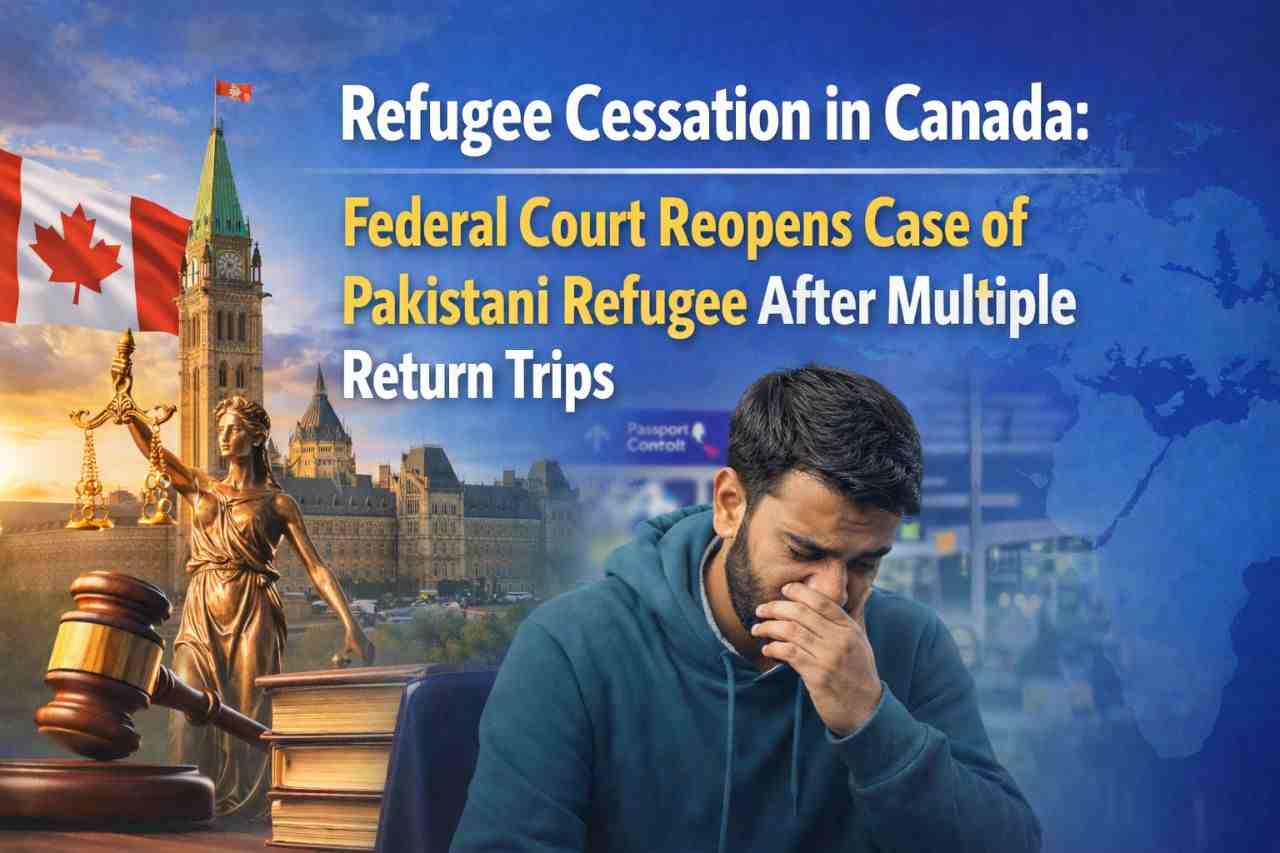

Canada’s refugee system is built on fairness, legal clarity, and careful review of evidence. A recent Federal Court decision has once again brought attention to how refugee cessation in Canada works and what happens when protected persons travel back to their country of origin.
In a February 2026 ruling, the Federal Court set aside a decision by the Refugee Protection Division that had revoked a Pakistani man’s refugee status after he returned to Pakistan six times. The Court found that the Refugee Protection Division failed to properly assess critical evidence before concluding that the individual had re-availed himself of Pakistan’s protection.
This decision does not automatically restore permanent protection. Instead, it sends the case back for reconsideration by a different panel. Still, it raises important questions about refugee cessation in Canada and the legal standards applied.
Table of Contents
Refugee Cessation in Canada
The Refugee Protection Division had ruled that the applicant voluntarily re-availed himself of Pakistan’s protection. In simple terms, the tribunal concluded that by returning multiple times, he demonstrated that he no longer needed refugee protection.
The Division Pointed to Several Factors
- The number of visits to Pakistan
- The length of those visit
- A large wedding held in Pakistan
- The fact that he brought his family with him
It also found inconsistencies in his description of who he feared, noting that his narrative appeared to shift between religious extremists and government authorities. However, the Federal Court found that the tribunal did not fully consider an important element. The applicant had testified that he avoided attending mosque and avoided community interaction while in Pakistan due to fear of religious extremists.
According to the Court, this precautionary behaviour was relevant evidence that could rebut the presumption of re-availment. The failure to engage with this evidence meant the decision did not meet the required standard of justified and intelligible reasoning. As a result, the case will be reconsidered by a differently constituted panel of the Refugee Protection Division.
What Is Re Availment
To understand this case, it is important to clarify how refugee cessation in Canada works. Under Canadian law, refugee status can be revoked if a protected person voluntarily reavails themselves of the protection of their home country. This may occur if they:
- Obtain a passport from their country of origin
- Travel back to that country
- Seek assistance from its authorities
The key issue is intention. Did the person demonstrate that they no longer require protection? However, returning to a country of origin does not automatically mean refugee protection must end. The decision maker must assess all evidence, including reasons for travel and precautions taken. Each case turns on its specific facts. This ruling highlights an important principle. Decision makers must address all relevant evidence before revoking refugee status. The Federal Court emphasized that refugee cessation carries serious consequences. Loss of refugee status can also affect permanent residence status in certain situations. Therefore, tribunals must provide clear and transparent reasoning.
In this case, the Court determined that focusing only on visible factors such as wedding size and travel duration without addressing precautionary conduct was insufficient. This does not mean that repeated travel is without risk. It means that context matters. For protected persons in Canada, this decision reinforces the importance of understanding how travel may impact status and how evidence is assessed.
Practical Lessons for Protected Persons
If you hold refugee protection in Canada, travel to your country of origin can trigger a cessation review. Before making travel decisions, consider:
- The legal risks involved
- The reason for travel
- The duration of stay
- Any steps taken to minimize exposure to feared harm
Refugee Cessation in Canada Requires Careful Legal Analysis
The recent Federal Court ruling serves as a reminder that refugee cessation in Canada must be based on full and careful consideration of evidence. While repeated travel may raise serious concerns, decision makers must assess intent and precautionary measures before revoking protection.
Canada’s refugee system remains grounded in legal standards and judicial oversight. Cases like this illustrate how the courts ensure that procedural fairness is respected. If you are a protected person or have concerns about travel and refugee status, consult qualified immigration professionals before making decisions.
FAQs About Refugee Cessation in Canada
1. What is refugee cessation in Canada
Refugee cessation in Canada refers to the legal process through which refugee protection may be revoked if a protected person is found to have re availed themselves of their country’s protection or no longer requires protection.
2. Does travelling to my home country automatically cancel refugee status
No. Travel can trigger a review, but each case is assessed individually. Decision makers must examine intent, circumstances, and evidence before making a determination.
3. What is re availment
Re availment occurs when a refugee voluntarily seeks protection from their country of origin. This can include returning for extended stays or obtaining official documents.
4. Can refugee cessation affect permanent residence
In some cases, cessation may impact permanent resident status. Legal advice is essential if you are facing cessation proceedings.
5. What factors are considered in a cessation case
Tribunals may review travel history, duration of visits, purpose of travel, precautionary measures, and consistency of testimony.
6. Can a Federal Court overturn a Refugee Protection Division decision
Yes. If procedural fairness or legal reasoning is flawed, the Federal Court can set aside the decision and order reconsideration.
7. What should protected persons do before travelling abroad
Seek professional advice. Understand the legal risks and document any compelling reasons and precautionary measures.